

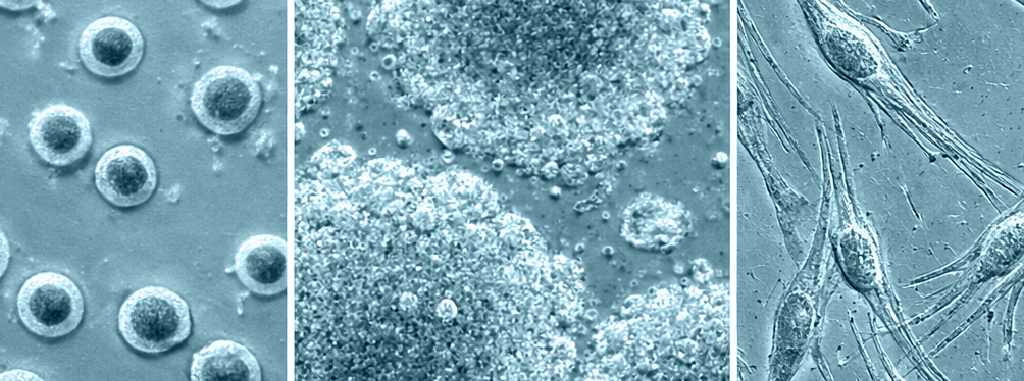
Cell and gene therapies undergo a complex manufacturing and regulatory journey before reaching patients for treatment. The path begins with cells from a patient, qualified healthy donor, or cell bank and ends with a final formulated dose ready for administration. Each stage along the path introduces potential variability, and regulators increasingly expect manufacturers to demonstrate that quality is maintained across the entire lifecycle of the product. This expectation demands more than simply confirming that the final product meets release specifications, rather, it requires evidence that manufacturing processes consistently produce comparable cells from start to finish.
Lifecycle Quality: A New Regulatory Expectation
Regulatory agencies such as the FDA and EMA emphasize lifecycle management as a central component of advanced therapy development. Guidance documents consistently highlight the importance of understanding how Critical Quality Attributes (CQAs) and Critical Process Parameters (CPPs) interact throughout manufacturing. For cell therapy developers, this means building a control strategy that spans the entire process rather than focusing only on isolated checkpoints. A therapy that appears consistent at final release must also demonstrate stability and comparability at earlier stages such as the input cellular material, expansion, and genetic modification. Without that broader perspective, it becomes difficult to show that the process remains stable as production scales up.
Maintaining this level of oversight is challenging because living cells change continuously as they grow, become activated, and differentiate. Conventional assays provide important information about specific attributes, yet they often capture data only at discrete moments in time. Endpoint measurements can only reveal the state of the culture at the moment the assay is performed. They cannot describe how the culture arrived at that state or whether important shifts occurred earlier in the process. As a result, deviations in cellular behavior may remain hidden until they affect yield, potency, or other quality attributes.
Where Quality Drift Happens
Quality drift can emerge at the earliest stages of a cell therapy workflow, beginning with the cellular starting material itself. Many advanced therapies rely on primary cells derived from donors or patients, where biological variability is inherent. Differences in donor or patient physiology, collection conditions, or handling during processing can influence how cells perform once they enter the manufacturing process. Even when primary cells are expanded into master and working cell banks to support therapy production, subtle changes in those banked cells can occur over time due to thawing conditions, passage history, or early culture environments. These factors may alter cell behavior in ways that are difficult to detect with traditional assays. Identifying these changes early is essential, since the cellular starting material establishes the biological foundation for every subsequent step in the manufacturing process.
The cell expansion stage introduces another layer of complexity. As cells proliferate, their metabolic activity, differentiation state, and population composition can shift. Minor environmental changes such as nutrient availability, oxygen levels, or culture density may influence how cells behave. Traditional measurements often capture these parameters indirectly, leaving gaps in the understanding of how cell populations evolve during expansion.
Additional variability can appear during genetic modification or activation steps. Viral transduction efficiency, activation kinetics, and cellular stress responses all influence the final therapeutic product. If these processes vary between manufacturing runs, the resulting cells may exhibit differences in potency or functional activity. Identifying those differences early allows manufacturers to implement corrective measures before downstream stages are affected.
Even the formulation and final processing steps present opportunities for quality drift. Handling conditions, storage environments, and preparation procedures may alter cell viability or phenotype. Manufacturers must therefore demonstrate that the product remains consistent from the moment cells leave the bioreactor until the final dose is prepared.
Monitoring Cells Through the Manufacturing Journey
Continuous cellular analytics offer a way to monitor these transitions across the entire lifecycle. Technologies capable of measuring intrinsic cellular properties in real time can provide insight into how cell populations change during manufacturing. Instead of observing isolated snapshots, scientists can follow functional changes as they develop. This approach provides a continuous record of CQAs and CPPs across each stage of production.
Laser Force Cytology (LFC) provides this type of continuous monitoring by measuring the intrinsic optical and mechanical properties of individual cells without the use of dyes, reagents, or destructive preparation steps. Because the analysis occurs at single cell resolution and does not alter the sample, measurements can be performed repeatedly throughout the manufacturing process. The resulting datasets reveal how cell populations change as they move from collection through expansion, modification, and formulation.
When these measurements are collected across multiple runs, they form a continuous record of process behavior. This record creates a through-line of evidence that links the cellular starting material to performance in early manufacturing stages and final product function. Manufacturers can compare primary cell or cell bank characteristics with later expansion profiles or examine how genetic modification steps influence downstream cellular performance. Over time, this information strengthens the scientific understanding of the process and supports more robust control strategies.
Supporting Lifecycle Management and Comparability
Lifecycle monitoring also strengthens comparability assessments. Regulatory agencies often require manufacturers to demonstrate that changes in process scale, equipment, or manufacturing sites do not alter the function of the final product. Establishing comparability can be difficult when analytical data are limited to a few endpoint measurements. Continuous cellular monitoring provides a richer dataset that helps explain why products remain equivalent despite process adjustments. The ability to connect upstream conditions with downstream outcomes provides stronger evidence that manufacturing changes do not affect therapeutic function.
This perspective aligns with the growing regulatory emphasis on lifecycle management. Agencies expect manufacturers to build knowledge progressively as therapies move through development. Early datasets inform later decisions, and each stage contributes to a more comprehensive understanding of the final therapeutic product. Continuous cellular monitoring supports this model by generating consistent information throughout development rather than relying solely on late-stage testing.
Quality from Start to Finish
From starting cells to final dose, the ability to observe how living cells behave during manufacturing offers valuable insight for both developers and regulators. Continuous monitoring using LFC provides earlier detection of deviations, deeper understanding of process behavior, and stronger support for comparability claims. Maintaining visibility on cellular quality across the entire manufacturing lifecycle will become increasingly important as advanced therapies progress toward commercial scale.
Technologies like LFC that capture functional cellular data throughout this journey will allow manufacturers to demonstrate that their processes remain stable, reproducible, and well understood. When quality can be tracked across every stage of production, developers gain greater confidence that the final product delivered to patients reflects the same biological performance that defined the therapy during development.
Learn how Laser Force Cytology supports lifecycle monitoring and strengthens control strategies across advanced therapy manufacturing at LumaCyte.com.
- Guidance for Industry PAT – A Framework for Innovative Pharmaceutical Development, manufacturing, and Quality Assurance
- PAT strategies and applications for cell therapy processing – ScienceDirect
- Concise Review: Process Development Considerations for Cell Therapy | Stem Cells Translational Medicine | Oxford Academic
- Quality cell therapy manufacturing by design | Nature Biotechnology
- CAR-T cell expansion platforms yield distinct T cell differentiation states – Cytotherapy
- Frontiers | Biological Considerations in Scaling Up Therapeutic Cell Manufacturing
- Cell Therapy Drug Product Development: Technical Considerations and Challenges – Journal of Pharmaceutical Sciences
- Catalent-LFC-FierceBio-Gene-Therapy-White-Paper.pdf
- Rapid In-Process Measurement of Live Virus Vaccine Potency Using Laser Force Cytology: Paving the Way for Rapid Vaccine Development