

Turning high‑dimensional single‑cell data into early, actionable biological insight
Biological systems rarely fail all at once—cells signal the earliest signs of drift, stress, or potency loss long before traditional assays detect a problem. LumaCyte’s combined machine learning and multivariate analytics framework transforms these subtle, force‑dependent cellular‑response signatures into clear, early indicators that help teams optimize processes, strengthen control strategies, and prevent downstream failures. By identifying these shifts earlier and with greater precision, teams can build more consistent, scalable processes that support advanced regulatory strategies and ultimately accelerate commercial readiness and patient access.
Unlike conventional machine learning approaches that rely on broad, multi‑input datasets and largely retrospective patterns, LumaCyte’s platform is built on real‑time, label‑free measurements captured at the single‑cell level. By grounding machine learning in the actual biochemical and biophysical behavior of individual cells, developers gain a far more precise and biologically truthful view of cellular dynamics—one that predicts functional outcomes rather than inferring them from markers or bulk averages.
Powered by Laser Force Cytology™ and the Radiance® instrument, this capability gives teams a new level of visibility into how cells behave—and how this behavior can impact downstream outcomes.
High‑Resolution Single-Cell Data Built for Prediction
Every Radiance® run generates dozens of quantitative, label‑free parameters per cell, capturing the intrinsic biochemical and biophysical properties that define cellular state in real-time. These whole‑cell fingerprints form a rich, multivariate dataset ideal for machine learning predictive analytics.
Together, multivariate analysis and machine learning (ML/AI) can:
- Detect early biological changes that precede potency, yield, or quality loss
- Understand how process inputs shape cellular behavior
- Predict divergence or drift before it impacts yield
- Identify the variables that matter most for stability and performance
This is where the combination becomes powerful: multivariate analytics extracts structure and relationships, while machine learning amplifies predictive power—together delivering insight that neither could achieve alone.
Consistent, Quantitative Measurements for Reliable Models
Predictive analytics is only as strong as the data behind it. Radiance® delivers exceptional measurement stability across days, operators, and sample runs—ensabling models that are reproducible, trustworthy, and scalable across programs and sites.
This consistency supports:
- Longitudinal monitoring
- Streamlined comparability studies
- Tech‑transfer readiness
- Continuous process verification
Stable, quantitative single‑cell data means models don’t drift, degrade, or require constant retraining—saving time, money, and development cycles.

From Multivariate Signatures to Predictive Insight
Radiance® data feeds directly into advanced modeling frameworks—including PCA, PLS, LDA, clustering algorithms, and supervised machine learning (ML/AI) models—to reveal patterns invisible to conventional assays.
These models help teams:
- Predict potency, quality, from LFC™ vitality and cell health fingerprints at thaw
- In process answers in minutes identifies emerging variability before it escalates
- Understand process–product relationships with clarity
- Enables rapid process optimization and scale up strategies
This is where the combined approach becomes transformative: it turns complex cellular data into a roadmap for better decisions, faster development, more consistent manufacturing, and better patient outcomes.
Prescriptive Analytics for Process Optimization

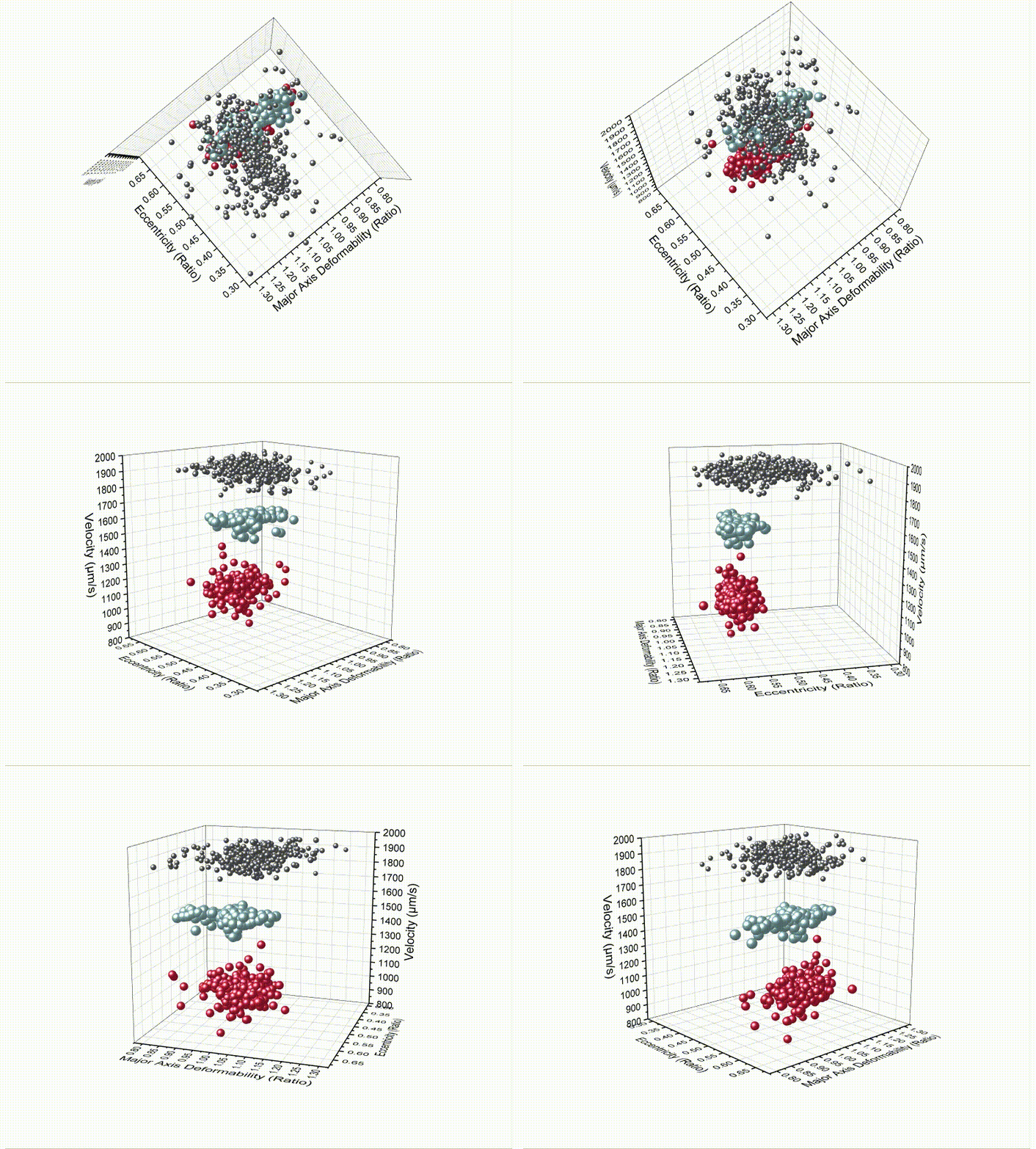
Beyond early detection, LumaCyte’s LFC™ analytics provide prescriptive guidance—pinpointing which variables drive performance and where intervention will have the greatest impact.
Teams gain:
- Clear direction on root‑cause investigation
- Insight into how cells respond to process changes
- Data‑driven recommendations for optimization
- Confidence in scaling, transferring, or modifying processes
Finding these insights early—rather than after a batch deviation or potency failure—saves time, reduces cost, and strengthens overall program robustness.
Frequently Asked Questions About Predictive Machine Learning Analytics
How does Radiance® generate data suitable for predictive analytics?
Radiance® captures dozens of quantitative, label‑free parameters per cell, producing high‑dimensional datasets ideal for multivariate modeling and machine learning (ML/AI).
What types of models are used?
Depending on the question, models may include PCA, PLS, LDA, clustering algorithms, or both supervised and unsupervised machine learning approaches designed to detect early shifts, classify states, or predict outcomes.
Can predictive analytics support both development and manufacturing?
Yes. The same multivariate signatures that reveal early biological changes in development can be used for monitoring, comparability, and quality control strategies in manufacturing.
Do I need data science expertise to use these models?
No. LumaCyte’s bioanalytics lab team can support method development, model building, interpretation, and integration into existing workflows where LFC™ scientific experts will then transition and train users on the validated models at the sponsor sites.
How Can LumaCyte Support Your Program?
Ready to accelerate your development with predictive, single‑cell insight? LumaCyte’s combined machine learning (ML/AI) and multivariate analytics give teams the earliest, clearest view of how cells respond to process conditions. Built on validated, ISO‑aligned analytical rigor, Radiance® supports robust regulatory strategies and commercial‑scale readiness. With clearer, earlier insight into cellular behavior, teams can advance development with confidence, strengthen quality assurance, and deliver reliable therapies to the patients who depend on them.